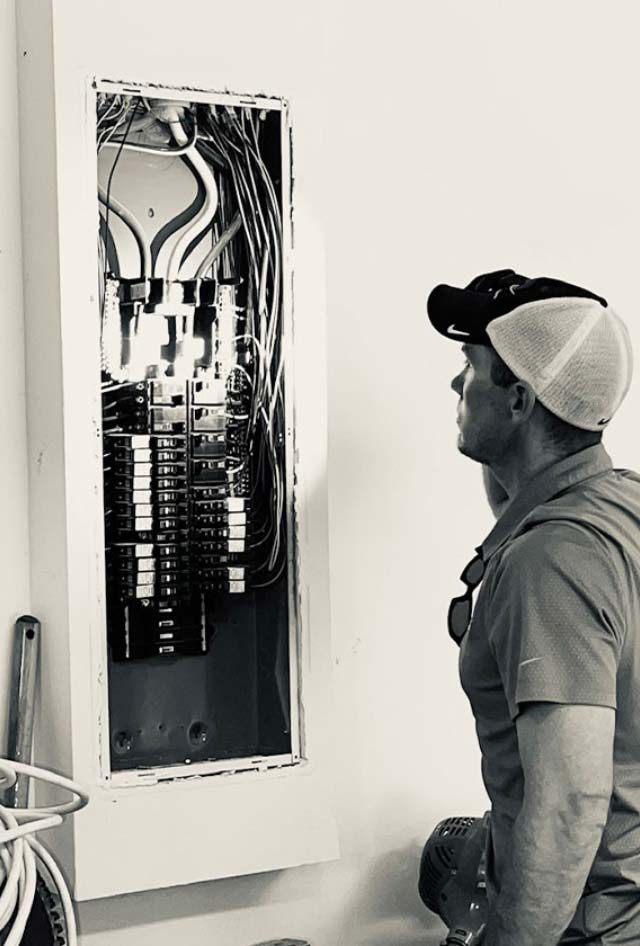
As the most trusted home inspection company in Wadmalaw Island, I know that purchasing a home is one of the most significant investments that you will ever make. That's why choosing the right home inspector is so important - because you want to know that your new home is in good shape. With PGR Home Inspections, you can be certain you're making the right purchasing decision.
Unlike some home inspectors in Wadmalaw Island, SC, I inspect from attic to crawl and wall to wall, while educating my clients throughout the home inspection process. Because a thorough home inspection ultimately depends on the inspector's dedication and effort, I make it my goal to put forth the maximum amount of effort to keep you aware and informed.
As a certified, licensed professional, I provide all of my clients with an unbiased third-party opinion, regardless of whether they are buyers, sellers, or real estate agents. Once we're finished, I will send you an in-depth, educational inspection report to help you make an educated decision about your sale or purchase.
With PGR Home Inspections on your side, you will build your knowledge and achieve peace of mind during the most stressful times.
Here's how:
Think of a home inspection like an annual check-up at with your doctor. Home inspections are used to ensure that everything is working correctly in your home - from your sinks and appliances to your windows and roof. A great home inspection will help shine a light on concerning issues located inside and outside your home, which may affect your quality of life.
Home inspections are also helpful for spotting potential risks that may cause concern down the line. When we send you your home inspection report, you will have a much better idea of any problems that are present in your home. Included in your report are recommended repairs and suggestions on what actions to take as your home ages.
Because different circumstances require different types of home inspections, we offer several choices to cater to your needs:
You've heard it before - "A man's house is his castle." It is a place of peace, relaxation, and privacy. However, the steps leading up to your new purchase can be exhausting, expensive, and stressful. After all, when you buy a home, you're investing in your family's future. That is why I believe that having an unbiased general home inspection (or buyer's inspection) is an investment all on its own.
Our goal is to keep you informed and aware of all the components in your new home. In fact, I encourage you to be present and ask questions during your inspection. That way, you can walk into your closing with confidence, knowing you are making an informed purchasing decision. When you hire PGR for your general home inspection, know that I am here for YOU. We will spend as much time as needed to explain our findings and answer any questions that you may have about your buyer's home inspection in Wadmalaw Island, SC.
After I have inspected your home from bottom to top, you will receive your report that includes high-quality color photos depicting our findings the same day. Should you have questions relating to your report, simply give me a call after thoroughly reviewing it. At PGR Home Inspections, I strive to make this an enjoyable, informative experience that expands your knowledge and helps you understand building science.
When you're selling your home, few things are as frustrating as a deal falling through due to maintenance issues. All too often, deals fall through because the buyer's inspector finds a significant issue that could have corrected earlier. Having a pre-listing inspection (or a seller's inspection) puts the control back in your hands. With a pre-listing inspection, you can get prepared for your sale by revealing any major defects in your home that need repairing. Having a pre-listing inspection saves you money, time, and reduces your overall stress levels in the long run.
By completing a pre-listing inspection, you can take as much time as you need to decide which repairs will increase your home's value the most. That way, you get the highest return on investment. By making these repairs on your own time, you can sift through several repair estimates and choose the one makes the most sense for your budget.
As you enter negotiations, you may present your pre-listing inspection as a token of good faith to interested buyers. Sharing your seller's inspection with potential buyers lets them get a look at the condition of your home. More importantly, it will let the buyer know how much money and work you have put into fixing your home's defects, which helps warrant your listing price.
If you want to reduce the time it takes for negotiations, save yourself money, and get the best price for your home, a pre-listing home inspection is a wise choice.
If you're thinking of having a new construction home built, it's easy to understand why. New homes are often more energy-efficient, come with all-new systems and appliances, and can be customized to your exact preferences. Buying a new home also means you won't have to make repairs or deal with the wear and tear that most older homes have. However, new construction homes aren't always perfect. So, when your home is finished, and your builder explains the one-year warranty on their work, it's wise to schedule an 11th month home inspection.
Much like a general home inspection, I take an investigative, non-invasive approach when we inspect your newly built home. I will evaluate all visible and accessible areas of your new construction home to spot any potential issues. I even use thermal imaging at no extra cost to you.
When I have completed your 11th month inspection, you will receive a shorter, comprehensive inspection report with color photos and information on any defects we discover. You may take this valuable information to your builder, who can then make any repairs necessary before your warranty expires. That way, any repairs needed are done on the warranty company's time.
Additional benefits of an 11th month home inspection from PGR include:
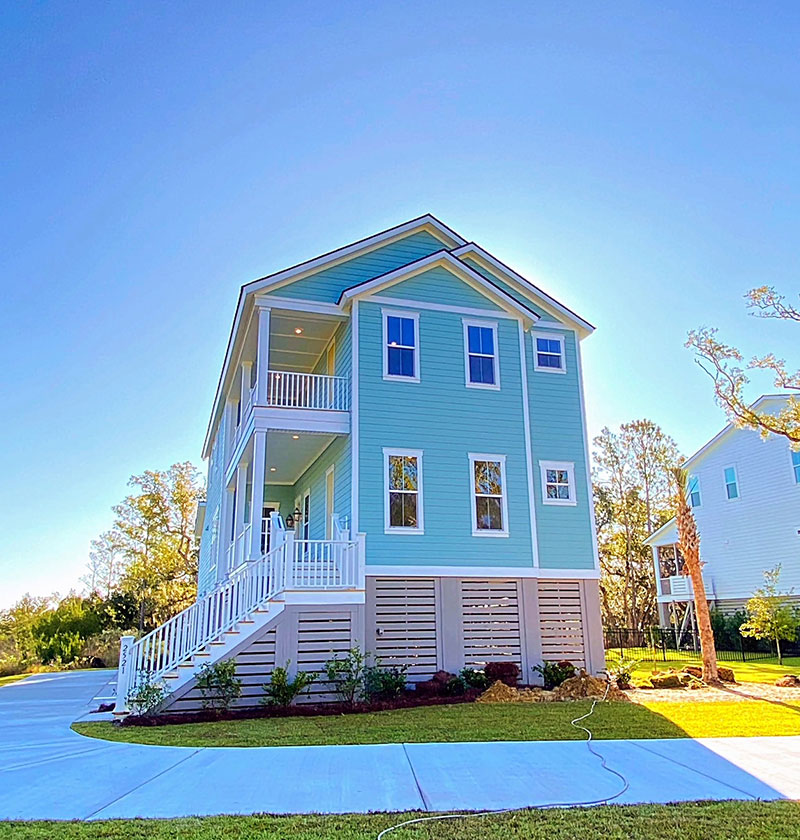
Homebuilders are aware that new construction homes can have defects. After all, there are many hands involved in building a house, including subcontractors you never meet. Because some flaws aren't obvious during the first year of living in a home, having an 11th month home inspection is a great way to protect yourself and your investment.
When you assume that your newly constructed home is void of defects, you could be setting yourself up for some nasty surprises down the line. For example, issues with your new home's systems might not reveal themselves until they malfunction. You will have to cover repair costs in cases like this because the builder's warranty has already expired. With PGR's 11th month inspections, I will ensure that your home's structure systems work properly. If they're not, you will have ample time to have any defects fixed before your warranty is up.
When you schedule your 11th month home inspection at the start of the last month of your warranty, you will have more time to submit a warranty claim. If you choose to wait until a few days before your warranty expires, you will be rushing to file a claim before your new home's warranty expires.

At PGR Home Inspections, I am proud to be the most reliable, thorough, unbiased home inspector in Wadmalaw Island, SC. I believe in working hard and treating our customers right, by giving them an in-depth look at their home to make knowledgeable decisions with confidence. I believe in working hard and treating our customers right by giving them an in-depth look at their homes to make knowledgeable decisions with confidence. When you allow me to serve you, I aim to exceed your expectations by inspecting "Attic to Crawl and Wall to Wall", while walking you through our inspection process step-by-step.
Give me a call today at 843-789-0653 with your questions. When you're all set, you can go online to
schedule your Wadmalaw Island home inspection
JOHNS ISLAND, S.C. (WCSC) — A proposed 296-acre residential subdivision along Plow Ground Road is moving through city review, while nearby, the Lowcountry Land Trust is expanding a 96-acre corridor of protected land, including wetlands and forested areas.The project highlights the island’s unique approach to balancing growth and conservation. City planners said the Urban Growth Boundary helps guide where development should occur and where land should remain protected, ensuring new housing coexists with preserved natural sp...
JOHNS ISLAND, S.C. (WCSC) — A proposed 296-acre residential subdivision along Plow Ground Road is moving through city review, while nearby, the Lowcountry Land Trust is expanding a 96-acre corridor of protected land, including wetlands and forested areas.
The project highlights the island’s unique approach to balancing growth and conservation. City planners said the Urban Growth Boundary helps guide where development should occur and where land should remain protected, ensuring new housing coexists with preserved natural spaces.
Planning Director Robert Summerfield said the Woodall development is still in technical review, with revisions needed for stormwater management before construction can begin. He said the Urban Growth Boundary is “about balance, protecting environmentally sensitive areas while providing opportunity for housing in the right places.”
Meanwhile, the Lowcountry Land Trust is working to preserve connected landscapes along Plow Ground Road.
“Connected, protected landscapes are the goal, whether you have six acres or 600 acres, there’s value in protecting that land for generations to come,” Chief Conservation Officer Kate Parks Schaefer said.
The Holmes Tract, a six-acre parcel added to the corridor, safeguards three acres of forested wetlands that drain into Bohicket Creek. These wetlands act as natural sponges and filters, slowing stormwater and trapping pollutants, protecting water quality and the local ecosystem.
“When we close our eyes and we think of home in the Lowcountry, we think of wild places, wildlife habitat, and clean water. Conservation easements help us achieve those things,” Schaefer said.
The Urban Growth Boundary ties it all together, showing where development is appropriate and where conservation efforts can preserve the island’s rural character. On Johns Island, growth and preservation aren’t opposing forces; they’re parts of a balanced approach to planning, ensuring residents can enjoy both housing and natural open space for generations to come.
JOHNS ISLAND — A national homebuilder has reached the end of its appeals in state courts fighting for what it believes is its right to cancel sales contracts for any reason it wants.That includes putting a customized house back on the market to sell to another buyer at a higher price.A March 11 ruling by the S.C. Supreme Court culminates the five-year lawsuit against Charlotte-based Eastwood Homes filed by contracted buyers of nine homes within the builder’s Swygert’s Landing subdivision on Johns Island....
JOHNS ISLAND — A national homebuilder has reached the end of its appeals in state courts fighting for what it believes is its right to cancel sales contracts for any reason it wants.
That includes putting a customized house back on the market to sell to another buyer at a higher price.
A March 11 ruling by the S.C. Supreme Court culminates the five-year lawsuit against Charlotte-based Eastwood Homes filed by contracted buyers of nine homes within the builder’s Swygert’s Landing subdivision on Johns Island.
The case centered on a dispute between the buyers and builder after Eastwood canceled each of their contracts on the same day in June 2021, some shortly before the sales were to close. In return the buyers were given a refund of their deposits and $100 for “damages.”
Ever since, the purchasers have stood their ground against the homebuilder for breach of contract, arguing the language regarding cancellation was vague, unfair and one-sided.
Two state courts have since agreed. The Supreme Court has declined to intervene in those decisions.
“Eastwood has spent five years trying to convince a court, any court, that it should be able to cancel contracts on families days before closing and walk away with no consequences,” attorney Ross Appel, co-counsel for the purchasers, told The Post and Courier. “This issue is now settled. These are real contracts with real families and Eastwood is going to be held accountable."
Plaintiffs Chris and LaShonda Jones Rayborn were one month away from closing when they got the email on June 4, 2021 — a day Chris Rayborn said is burned into his memory.
“At the time, we were living in a townhouse and had already purchased all the furniture and everything,” he said.
They waited out years in the crammed space before inevitably buying another house on Johns Island.
Lou Galvinos and his wife, Kimberly, were in a similar spot. Four days before the Eastwood email arrived, the plaintiffs had sold their Kentucky house and put their belongings in storage. Because they had to move to Charleston for jobs, they ended up living in a nearby apartment for three years with their items in storage hoping the case would have resolved sooner.
But they and the other buyers stuck it out, filing individual lawsuits against Eastwood that later became one big play against the homebuilder.
“Our lawyers said it would be a very hard sell, but we didn’t think it would be because we were the ones who were wronged,” Galvinos said. “We signed the contract with them, asking about price increases and stuff like that. They said the price is guaranteed once you sign the contract … (because) they buy all the products right then.”
In June 2025, the S.C. Court of Appeals upheld an initial 2024 ruling by Charleston County Master-in-Equity Mikell Scarborough that said the cancellation provision in Eastwood’s standard contract are “unconscionable” — or so unfair and unreasonable that they’re unenforceable.
The builder has long-maintained language in a specific contract clause gives the company unilateral authority to cancel agreements at any time prior to closing if a “bonafide dispute” arose. The clause also gave Eastwood the sole discretion to define what a “dispute” is.
The builder doubled-down in a 2024 hearing, so much so that Allen Nason, the company’s general counsel, said that cancellations are up to “the seller’s sole judgment, so I don’t really care what your opinion is. It is only my opinion that matters, period."
After Eastwood was twice denied, it then petitioned the state Supreme Court to take its case. But the high court ruled March 11 in a one-sentence order: “Based on the vote of the court, the petition … is denied.”
Eastwood’s lawyer, Ward Bradley, did not respond to a request for comment.
The buyers, who planned to move from all over the U.S. to Johns Island, entered into separate contracts with Eastwood from September 2020 to January 2021 to build houses to their specifications on lots they selected, according to the legal filing.
The prices ranged at the time from $534,000 to nearly $609,000.
For the last few years, the Swygert’s Landing homes have sat vacant and in various stages of construction — some completed while others have bare-bones foundations.
The lawsuit alleges Eastwood suddenly terminated their contracts citing a "legal error" in the paperwork, asking the buyers instead of waiting for a fix to negotiate a new contract for the same property at "current market value."
By that time, home prices in the area had risen to upwards of $800,000.
A majority of the homeowners have since found new living situations, but Appel said the Supreme Court ruling now brings the original, individual lawsuits against the builder back into play. The breach of contract complaints had stalled for years to focus on the combined lawsuit.
“We are excited to get through these appeals and get these cases in front of a jury,” said Michael T. Cooper of Apostolou Law Firm, who is co-counsel for the buyers. “Like the appellate courts have done, we believe the jury will ultimately side with these innocent home buyers and look forward to that day.”
The nine individual lawsuits are now “back on track,” Appel said. The main outcome at this point is damages, rather than following through on the sales.
“We have a lot of time and money tied up into this. As far as lost equity, we lived in an apartment for three years hoping we’d get it… so we weren’t paying a mortgage then,” Galvinos said. “If we would have gotten the house when we were supposed to, we’d have a sub-3-percent mortgage. So you’re talking about all of that and storage for three years.”
The builder said they’d most likely tear the homes down anyway, Raborn said. Glavinos added that Eastwood told them “they’d never sell us the house anyway.”
While the March 11 ruling is only applicable for the nine buyers of these specific homes, Eastwood contracts around the state could potentially be affected because the disputed language must be removed, Appel said.
The developer of South Island Market on Johns Island has begun vertical construction and has secured two anchor tenants, including a new medical provider for the area.The 34-acre mixed-use project at the corner of Betsy Kerrison Parkway and River Road is being developed by Buddy Darby and son Charles Darby of Pinkney Partners.The first phase comprises five buildings totaling 45,000 square feet of commercial space. More than 53 percent has been ...
The developer of South Island Market on Johns Island has begun vertical construction and has secured two anchor tenants, including a new medical provider for the area.
The 34-acre mixed-use project at the corner of Betsy Kerrison Parkway and River Road is being developed by Buddy Darby and son Charles Darby of Pinkney Partners.
The first phase comprises five buildings totaling 45,000 square feet of commercial space. More than 53 percent has been leased with the the recent addition of two regional anchors: Roper St. Francis Healthcare and Daniel Ravenel Sotheby’s International Realty.
Roper will establish a primary care medical office to serve the area's growing population, while the real estate agency’s newest office will work with buyers and sellers to capture demand for luxury real estate services on Johns, Kiawah and Seabrook islands.
“The pace of interest we are seeing reflects the scarcity of high-quality, master-planned commercial space in this corridor,” said Charles Darby. “With our building construction started, the project moves into its final pre-opening phase.”
Darby said the tenant mix is being finalized now “to ensure a cohesive experience for the community” when the property opens. Completion is expected around late 2026 or early 2027 with a spring 2027 opening.
Overall the project will feature roughly 82,000 square feet across eight buildings designed for a mix of retailers, office users and professional services tenants.
The development will also include 79 luxury townhomes built by Pennsylvania-based Toll Brothers and 16 acres of preserved open space.
The developers are no stranger to the area. Buddy Darby was among the founders of the original residential developer of Kiawah Island and its two private golf courses. The group, sold to South Street Partners in 2013, also built the nearby Freshfields Village.
RCB Development has expanded its Charleston-region footprint with the purchase of a three-property flex industrial portfolio.
The $11.175 million sale totals 66,942 square feet of small-bay industrial space, the Charleston-based real estate investment and development firm said.
The three-acre portfolio was acquired in an off-market sale that closed in January. The properties, leased to 22 tenants, include: 29,000 square feet of rentable space at 457 Jessen Lane off Clements Ferry Road in Charleston near Daniel Island; 12,000 square feet at 757 Long Point Road in Mount Pleasant; and 26,500 square feet at 237-241 Old Summerville Road in Summerville.
The Charleston and Flowertown properties are traditional small-bay industrial sites, while the Long Point Road investment includes retail and medical-based users.
The portfolio was 98 percent occupied at closing, with suites averaging about 2,250 to3,000 square feet.
“Our strategy centers on acquiring well-located infill industrial product with strong occupancy but embedded rent growth,” said Russell Canard, principal at RCB. “Small-bay industrial remains one of the most supply-constrained asset classes in the region, and this portfolio offers both stable in-place cash flow and meaningful upside through our redevelopment and active asset management.”
RCB owns several other South Carolina properties, including Fairmount Plaza in Mount Pleasant, a retail center it bought for $15 million in 2025; a North Charleston business park that was sold for $5.3 million in 2023, and a 10,890-square-foot mix of office and warehouse space acquired on Pawley’s Island in 2024.
Not in the market to buy a historic downtown home but still want to tour a few? You’re in luck.
Historic Charleston Foundation’s annual fundraising tour, formerly known as the Festival of Houses & Gardens, kicks off March 18 and continues through April 11.
Now in its 79th year, the hallmark of The Charleston Festival includes access to privately owned historic homes, select interiors, private gardens and more.
Each category of the tour offers something unique. The Street Tours, for example, are the most popular and allow guests a close-up look at private gardens, homes and interiors of homes on or near a central and historic street.
The Beyond the Garden Gates option offers views of the landscape architecture and historic gardens of Charleston’s peninsula. Each tour is self-paced between properties, with docents on hand to tell visitors on the design, fauna and flora.
JOHNS ISLAND, S.C. (WCIV) — Helping combat the Lowcountry’s affordable housing crisis is a multilevel effort.Recently, the City of Charleston and Charleston County launched new initiatives aimed at helping lower-income residents afford homeownership. The work is not limited to the government.On Johns Island this week, Sea Island Habitat for Humanity is hosting its annual Women Build event, giving volunteers a chance to help construct a home for future homeowner Carol Mack.The sound of steady construction fill...
JOHNS ISLAND, S.C. (WCIV) — Helping combat the Lowcountry’s affordable housing crisis is a multilevel effort.
Recently, the City of Charleston and Charleston County launched new initiatives aimed at helping lower-income residents afford homeownership. The work is not limited to the government.
On Johns Island this week, Sea Island Habitat for Humanity is hosting its annual Women Build event, giving volunteers a chance to help construct a home for future homeowner Carol Mack.
The sound of steady construction filled the lot where Mack’s home is taking shape. Teams of volunteers worked alongside skilled craftsmen to move the project forward. Mack said taking part in the build is “rewarding.”
Regional Habitat for Humanity organizations are working to help Mack and others bridge the funding gap that often prevents families from purchasing homes. Emily Speck, with Sea Island Habitat for Humanity, said the need is especially urgent in Charleston County.
“And we all know that that is a crisis, especially in Charleston County,” Speck said.
According to the Charleston Metro Chamber of Commerce, nearly 90,000 families in the region spend about 30% of their income on housing costs.
Habitat for Humanity helps address that burden by setting mortgage terms designed to keep homes affordable. Speck said homeowners typically fall at or below 80% of the area median income, a range where affordable options can be difficult to find.
“The biggest thing for us is really that affordability,” Speck said. “Our homeowners fall within that 80% of median income. And really, depending on the families, that’s hard to find housing like that.”
Another goal is to place families in homes close to where they work.
READ MORE | "Habitat for Humanity merger aims to boost affordable home ownership in Charleston area."
Speck said advocacy is also part of the organization’s mission, whether that means traveling to Washington, D.C., or Columbia, South Carolina, or hosting community events.
“So advocating may look like going to D.C. or going to Columbia, but it’s also events like this,” Speck said. “It’s bringing the community out, showing them what we can all do together.”
About 300 volunteers are expected to participate in the build this week, a pace organizers say could shave nearly two months off construction time.
The project is expected to be completed in the spring.
“It’s something I’m going to own and look forward to,” Mack said.
A groundbreaking is also planned later this year for Sweetgrass Preserve, a 40-home development planned for Johns Island.
JOHNS ISLAND, S.C. (WCSC) — As Charleston County moves forward with a more than $350 million road project aimed at easing congestion at the intersection of U.S. Highway 17 and Main Road, some drivers said the construction is disrupting their daily routine and raising safety concerns.The long-planned project includes building a new interchange with flyover off-ramps connecting northbound and southbound U.S. 17 to Main Road, along with a Main Road spur bridge over U.S. 17. County leaders have said the improvements are designed to ...
JOHNS ISLAND, S.C. (WCSC) — As Charleston County moves forward with a more than $350 million road project aimed at easing congestion at the intersection of U.S. Highway 17 and Main Road, some drivers said the construction is disrupting their daily routine and raising safety concerns.
The long-planned project includes building a new interchange with flyover off-ramps connecting northbound and southbound U.S. 17 to Main Road, along with a Main Road spur bridge over U.S. 17. County leaders have said the improvements are designed to address persistent traffic backups in one of the region’s fastest-growing areas.
A key concern for one driver, James Adams, is the closure of Old Charleston Highway, which is being used to store construction equipment and allow crews to move between the two major roadways. The closure has limited direct access to several nearby businesses, including a Waffle House, a laundromat and a seafood restaurant.
Drivers who once used Old Charleston Highway as a side route now must enter and exit through the heavily congested intersection, navigating fast-moving traffic and frequent standstills.
Adams, who has lived in the area since 2016 and commutes from James Island, said he used to regularly visit the Waffle House near the intersection. Now, he often avoids it.
“With the construction, it’s not safe to turn around,” Adams said. “No matter how far you go down, you’re going to have to fight the traffic and then turn around and come back. I’m living over on James Island, which makes it a big problem.”
He said he is especially frustrated by the decision to block off direct access to the businesses.
“I’m just concerned that they have blocked the entrance into the businesses over here,” Adams said. “I mean, there’s no reason that they can’t allow customers to still come straight across.”
Adams said he has also noticed fewer customers inside the restaurants.
“All the businesses here, not only just Waffle House, are having the same problem,” Adams said. “People are not going… because of this construction. In fact, the Waffle House would normally be completely full right now and there’s just a few people in it.”
Adams said when construction first began, Old Charleston Highway remained open to drivers. Now that access is blocked, he worries the detours are not only inconvenient but potentially dangerous.
Project Manager Herb Nimz said the county understands the frustrations but emphasized the long-term goal of the work.
“We appreciate the community’s patience as the U.S. 17 and Main Road improvements take shape,” Nimz said. “There’s no question that a project of this scale brings temporary disruptions, and the project team is working hard to manage those impacts while keeping this critical work on track. In the end, these short-term inconveniences will pay off with safer travel, reduced congestion, and smoother, more reliable commutes for everyone.”
The overall project is expected to be completed by September 2028. There is currently no timeline for when Old Charleston Highway will reopen.