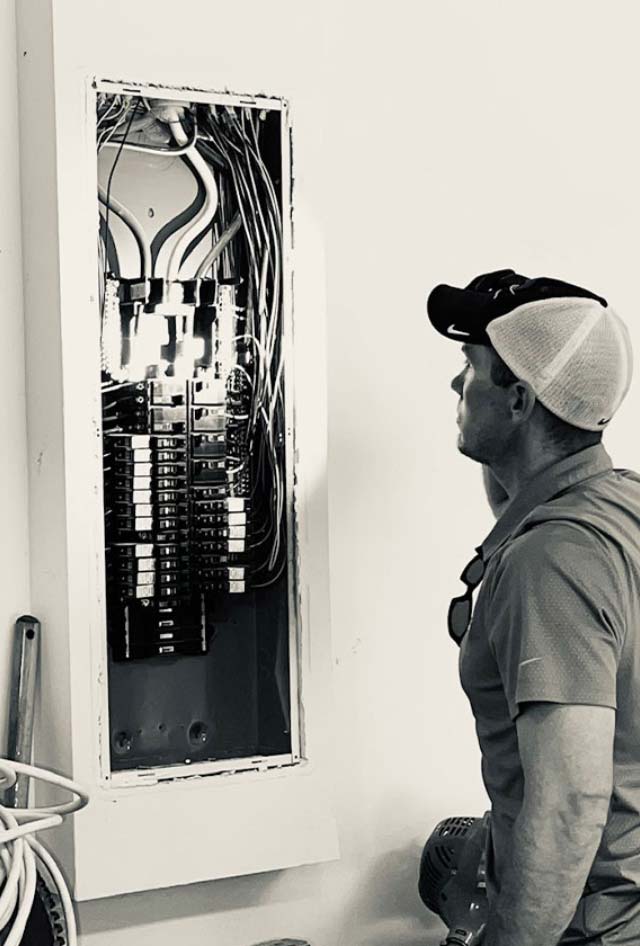
As the most trusted home inspection company in Ridgeville, I know that purchasing a home is one of the most significant investments that you will ever make. That's why choosing the right home inspector is so important - because you want to know that your new home is in good shape. With PGR Home Inspections, you can be certain you're making the right purchasing decision.
Unlike some home inspectors in Ridgeville, SC, I inspect from attic to crawl and wall to wall, while educating my clients throughout the home inspection process. Because a thorough home inspection ultimately depends on the inspector's dedication and effort, I make it my goal to put forth the maximum amount of effort to keep you aware and informed.
As a certified, licensed professional, I provide all of my clients with an unbiased third-party opinion, regardless of whether they are buyers, sellers, or real estate agents. Once we're finished, I will send you an in-depth, educational inspection report to help you make an educated decision about your sale or purchase.
With PGR Home Inspections on your side, you will build your knowledge and achieve peace of mind during the most stressful times.
Here's how:
Think of a home inspection like an annual check-up at with your doctor. Home inspections are used to ensure that everything is working correctly in your home - from your sinks and appliances to your windows and roof. A great home inspection will help shine a light on concerning issues located inside and outside your home, which may affect your quality of life.
Home inspections are also helpful for spotting potential risks that may cause concern down the line. When we send you your home inspection report, you will have a much better idea of any problems that are present in your home. Included in your report are recommended repairs and suggestions on what actions to take as your home ages.
Because different circumstances require different types of home inspections, we offer several choices to cater to your needs:
You've heard it before - "A man's house is his castle." It is a place of peace, relaxation, and privacy. However, the steps leading up to your new purchase can be exhausting, expensive, and stressful. After all, when you buy a home, you're investing in your family's future. That is why I believe that having an unbiased general home inspection (or buyer's inspection) is an investment all on its own.
Our goal is to keep you informed and aware of all the components in your new home. In fact, I encourage you to be present and ask questions during your inspection. That way, you can walk into your closing with confidence, knowing you are making an informed purchasing decision. When you hire PGR for your general home inspection, know that I am here for YOU. We will spend as much time as needed to explain our findings and answer any questions that you may have about your buyer's home inspection in Ridgeville, SC.
After I have inspected your home from bottom to top, you will receive your report that includes high-quality color photos depicting our findings the same day. Should you have questions relating to your report, simply give me a call after thoroughly reviewing it. At PGR Home Inspections, I strive to make this an enjoyable, informative experience that expands your knowledge and helps you understand building science.
When you're selling your home, few things are as frustrating as a deal falling through due to maintenance issues. All too often, deals fall through because the buyer's inspector finds a significant issue that could have corrected earlier. Having a pre-listing inspection (or a seller's inspection) puts the control back in your hands. With a pre-listing inspection, you can get prepared for your sale by revealing any major defects in your home that need repairing. Having a pre-listing inspection saves you money, time, and reduces your overall stress levels in the long run.
By completing a pre-listing inspection, you can take as much time as you need to decide which repairs will increase your home's value the most. That way, you get the highest return on investment. By making these repairs on your own time, you can sift through several repair estimates and choose the one makes the most sense for your budget.
As you enter negotiations, you may present your pre-listing inspection as a token of good faith to interested buyers. Sharing your seller's inspection with potential buyers lets them get a look at the condition of your home. More importantly, it will let the buyer know how much money and work you have put into fixing your home's defects, which helps warrant your listing price.
If you want to reduce the time it takes for negotiations, save yourself money, and get the best price for your home, a pre-listing home inspection is a wise choice.
If you're thinking of having a new construction home built, it's easy to understand why. New homes are often more energy-efficient, come with all-new systems and appliances, and can be customized to your exact preferences. Buying a new home also means you won't have to make repairs or deal with the wear and tear that most older homes have. However, new construction homes aren't always perfect. So, when your home is finished, and your builder explains the one-year warranty on their work, it's wise to schedule an 11th month home inspection.
Much like a general home inspection, I take an investigative, non-invasive approach when we inspect your newly built home. I will evaluate all visible and accessible areas of your new construction home to spot any potential issues. I even use thermal imaging at no extra cost to you.
When I have completed your 11th month inspection, you will receive a shorter, comprehensive inspection report with color photos and information on any defects we discover. You may take this valuable information to your builder, who can then make any repairs necessary before your warranty expires. That way, any repairs needed are done on the warranty company's time.
Additional benefits of an 11th month home inspection from PGR include:
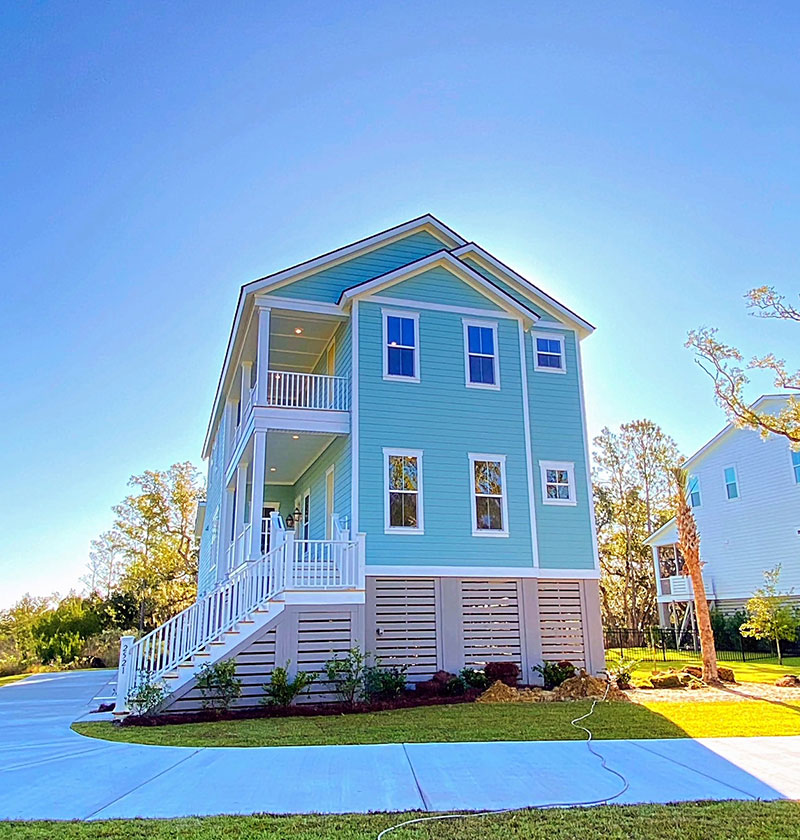
Homebuilders are aware that new construction homes can have defects. After all, there are many hands involved in building a house, including subcontractors you never meet. Because some flaws aren't obvious during the first year of living in a home, having an 11th month home inspection is a great way to protect yourself and your investment.
When you assume that your newly constructed home is void of defects, you could be setting yourself up for some nasty surprises down the line. For example, issues with your new home's systems might not reveal themselves until they malfunction. You will have to cover repair costs in cases like this because the builder's warranty has already expired. With PGR's 11th month inspections, I will ensure that your home's structure systems work properly. If they're not, you will have ample time to have any defects fixed before your warranty is up.
When you schedule your 11th month home inspection at the start of the last month of your warranty, you will have more time to submit a warranty claim. If you choose to wait until a few days before your warranty expires, you will be rushing to file a claim before your new home's warranty expires.

At PGR Home Inspections, I am proud to be the most reliable, thorough, unbiased home inspector in Ridgeville, SC. I believe in working hard and treating our customers right, by giving them an in-depth look at their home to make knowledgeable decisions with confidence. I believe in working hard and treating our customers right by giving them an in-depth look at their homes to make knowledgeable decisions with confidence. When you allow me to serve you, I aim to exceed your expectations by inspecting "Attic to Crawl and Wall to Wall", while walking you through our inspection process step-by-step.
Give me a call today at 843-789-0653 with your questions. When you're all set, you can go online to
schedule your Ridgeville home inspection
Editor’s note: This article was originally published in Automotive Dive, which has merged with WardsAuto to bring you expanded coverage of the industry. For the latest news, sign up for our free, daily newsletter.The automaker has invested $1.3 billion in its South Carolina factory since 2015, and said it will continue to invest in the plant to bring the 2.3 million square foot facility into operational capacity. The plant’s current capacity is 150,000 vehicles a year.Volvo said it sold over ...
Editor’s note: This article was originally published in Automotive Dive, which has merged with WardsAuto to bring you expanded coverage of the industry. For the latest news, sign up for our free, daily newsletter.
The automaker has invested $1.3 billion in its South Carolina factory since 2015, and said it will continue to invest in the plant to bring the 2.3 million square foot facility into operational capacity. The plant’s current capacity is 150,000 vehicles a year.
Volvo said it sold over 27,000 XC60s in the U.S. in the first eight months of this year, a nearly 20% jump from the same period in 2024, so demand for the mid-size SUV remains strong.
Currently, the plant in Ridgeville, South Carolina, assembles two models, the fully electric EX90 SUV and Polestar 3. Previously, the plant built the S60 sedan, but it was discontinued last year amid sluggish sales. Volvo sold 903 S60s in the U.S. this year through the end of August, a 92% decline from the same period last year.
Volvo’s plan to build more vehicles in the U.S. is in line with the company’s strategic initiative to ensure that each region has the products it needs to meet customer demands, according to the release. It includes a more focused approach in terms of product, technology, manufacturing and commercial to better meet the needs of its customers.
“Our investment plans once again reinforce our long-term commitment to the U.S. market and our manufacturing operations in South Carolina,” said Håkan Samuelsson, Volvo Cars’ CEO, in a statement.
Samuelsson previously served as CEO of the company from 2012 to 2022. In March, Volvo Cars announced he was returning to his former role as CEO and president for a two-year term effective April 1. His return will help the automaker navigate “fast-moving technological shifts” and “growing geopolitical complexity,” the company said at the time.
While company executives didn’t disclose details on Volvo’s next-generation hybrid model, Samuelsson hinted that it’s likely to be some type of full-size, hybrid SUV, a segment that’s popular with U.S. consumers.
“This is a bigger size car for primarily for America,” Samuelsson said during a media roundtable with company executives at its South Carolina factory on Sept. 23. “It should [have] room for big families and the luggage and everything they bring, so you could imagine what type of car.”
Samuelsson also said Volvo’s new hybrid vehicles will serve as a “bridge” towards its goal of producing only EVs sometime after 2030, which is later than its initial target of ending ICE vehicle production by 2030. The plans were revised due to slower-than-expected EV adoption, which also led to other automakers revising their short to mid-term electrification goals to meet growing consumer demand for hybrid models.
“If you look at the strategy of our company, we believe we will come out stronger as an electric company after this transformation,” Samuelsson said. “It will take longer than we thought five years ago, and that’s why we need to be pragmatic and have this type of plug-in [hybrid] or bridge solution.”
Following the launch of the new next-generation hybrid model for the U.S., Volvo plans to launch additional hybrid vehicles until EV adoption becomes more widespread and demand increases.
“It’s not just in one [hybrid vehicle] generation,” Samuelsson said. “We need the second generation to bridge also.”
Ramping up vehicle production in the U.S. will also help Volvo Cars mitigate the impact of tariffs, which the Trump administration had previously set at 25% on imported vehicles from the European Union.
However, the levies decreased to 15% on Sept. 5 as part of an agreement reached between the U.S. and the EU, according to a Federal Register notice from the Department of Commerce. The reduced levies became effective Sept. 5 and were later made retroactive to Aug. 1.
In addition to its plans to build more vehicles in the U.S., Volvo commemorated its 70th year in the U.S. market during a factory event this week, which South Carolina Gov. Henry McMaster attended. The automaker has sold over 5 million vehicles in the U.S. since it first started manufacturing vehicles in the country.
“Volvo Cars’ decision to further invest in Ridgeville reinforces South Carolina’s position as a national leader in automotive manufacturing,” Gov. McMaster said in a statement. “We’re proud to continue our partnership with Volvo Cars and look forward to the company’s ongoing success in South Carolina.”
On the Dash:Volvo Cars plans to expand production at its $1.3 billion factory in Ridgeville, South Carolina, shifting assembly of its popular XC60 SUV from Sweden to the U.S. in response to new tariffs under President Donald Trump’s trade policy.The Swedish automaker said the move will help offset a 15% levy on imported vehicles that replaced a previous 2.5% duty. Producing the XC60 domestically enables Volvo to avoid the higher tariff while also allowing for tariff-free exports back to Europe under prelimin...
On the Dash:
Volvo Cars plans to expand production at its $1.3 billion factory in Ridgeville, South Carolina, shifting assembly of its popular XC60 SUV from Sweden to the U.S. in response to new tariffs under President Donald Trump’s trade policy.
The Swedish automaker said the move will help offset a 15% levy on imported vehicles that replaced a previous 2.5% duty. Producing the XC60 domestically enables Volvo to avoid the higher tariff while also allowing for tariff-free exports back to Europe under preliminary U.S.-EU trade terms.
Sign up for CBT News’ daily newsletter and get the latest industry stories delivered straight to your inbox.
Volvo’s Ridgeville facility, designed to produce 150,000 vehicles annually, currently operates at approximately 20% capacity, employing roughly 2,000 employees on a single shift. The company originally pledged to create 4,000 jobs at the plant, a target it now expects to reach by 2030 as additional production lines are added.
The XC60, offered as both a gas-electric hybrid and a plug-in hybrid, has recorded more than 27,000 U.S. sales this year, representing a nearly 20% increase over the same period last year. Volvo executives emphasized that American buyers continue to show strong interest in hybrids, as many are reluctant to entirely abandon gas-powered vehicles.
At the same time, the company has emphasized that long-term growth will stem from EVs, warning that manufacturers who fail to make the transition may struggle to remain competitive.
In Ridgeville, Volvo already builds the $81,000 EX90 electric SUV, though only 2,500 units have sold in the U.S. this year, placing it sixth among the brand’s seven models. A refreshed EX90 debuting next year will include faster charging, adding more than 150 miles of range in 10 minutes, along with new safety and driver-assist features. Volvo also plans to launch a next-generation hybrid, designed explicitly for U.S. buyers, before 2030.
By that year, the company aims for at least 90% of its U.S. fleet to be “electrified,” a category that includes hybrids as well as fully electric vehicles. Volvo, which holds just 1% of the U.S. auto market, generates 20% of its global revenue in America.
Executives also noted that producing vehicles in South Carolina strengthens Volvo’s industrial presence in the U.S. while easing the impact of Trump’s tariffs on imported models and parts.
Volvo Cars is continuing to expand its operations at its Ridgeville plant in Berkeley County, with the recent announcement to add a new next-generation hybrid model to the production line before 2030.This announcement comes two months after the plant released plans that it will also be adding its best-selling XC60 SUV model to the production line by late 2026.The move is expected to double the plant’s workforce and marks a major step in the company’s long-term U.S. growth strategy and support production amid shiftin...
Volvo Cars is continuing to expand its operations at its Ridgeville plant in Berkeley County, with the recent announcement to add a new next-generation hybrid model to the production line before 2030.
This announcement comes two months after the plant released plans that it will also be adding its best-selling XC60 SUV model to the production line by late 2026.
The move is expected to double the plant’s workforce and marks a major step in the company’s long-term U.S. growth strategy and support production amid shifting global trade dynamics.
Currently employing 2,000 people, Volvo’s Ridgeville facility will ramp up hiring in the coming years to help meet a target of roughly 4,000 workers — an obligation tied to more than $200 million in state and local economic incentives.
Here’s what we know about the addition of the new car and what it means for South Carolina.
Volvo’s decision comes as the company looks to localize production of high-demand vehicles.
The company states that the Ridgeville plant now produces less than 5% of U.S. sales volumes, but that within five years, the goal is for the facility to produce more than 50%.
The yet-to-be-named hybrid model, expected before the end of the decade, is being designed specifically for U.S. customers, Volvo states, although details remain limited regarding the make and model of the car.
The XC60, which is set to start production by 2026, is one of Volvo’s most popular models in the U.S. market. Volvo states that 27,000 units were sold thus far in 2025 — roughly a 20% increase from 2024.
The Ridgeville plant, which has a production capacity of 150,000 cars per year, currently makes the all-electric Volvo EX90 and the Polestar 3 SUV. The addition of these two new models will push the plant closer to full production capacity and secure more local jobs.
The expansion of both the XC60 and the new hybrid model comes amid shifting global trade dynamics.
Imported vehicles from European nations now face a 15% tariff rate in the U.S., which is an improvement from the former set rate of about 25%.
Still, Volvo’s plans to ramp up production at the Ridgeville plant allow it to mitigate any impact of present or future trade changes, particularly for its high-volume models like the XC60, which is currently built in Sweden and China.
Volvo also states that they have a long-held “build where we sell” strategy, which complements the decision to bolster their South Carolina production.
Since breaking ground in 2015, Volvo has invested more than $1.3 billion in the Ridgeville plant.
Recent investments include a state-of-the-art battery pack assembly line and upgrades to the body and paint shops.
The plant began production in 2018 with the S60 sedan, which was discontinued in 2024 due to low demand. The facility pivoted toward electrified vehicles, beginning production of the EX90 SUV and later the Polestar 3.
Volvo Cars was founded in 1927 and now boasts about 42,600 employees worldwide. Headquartered in Sweden, Volvo has additional production plants in Belgium and China.